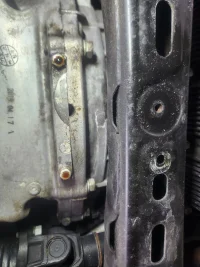
Appointment now booked at another area dealer. (More trustworthy i hope)
From MS CoPilot:
Oil collecting on the bellhousing with a wet area slightly higher up on a 3.3L Stinger GT almost always points to a leak above the rear main seal, not the seal itself. Rear main seal failures on this engine are extremely uncommon, and the patterns seen across owner reports and technical discussions point to a few repeat offenders that drip downward and land exactly where you’re seeing it.
---
Likely leak sources above the bellhousing
These are the most common places oil escapes on the 3.3L twin‑turbo and then runs down the back of the engine:
Valve cover gasket (especially passenger‑side rear)
Owners frequently report seepage at the rear of the passenger‑side valve cover, which then travels down the back of the block and onto the bellhousing. One forum case describes a “minor leak toward the rear by passenger side” that produced burning smells and oil residue in this exact area. Kia Stinger ...
Oil pan RTV seepage
The factory RTV sealant can begin to seep at the upper edges. Airflow while driving pushes the oil rearward, making it appear as if it originates from the bellhousing.
PCV/breather system misting
Oil vapor from the PCV system can condense and run down the back of the engine, especially in colder climates.
Turbo oil feed lines (SC300 already done)
Since your SC300 recall is completed, the LH turbo oil feed pipe/hose should have been replaced. That eliminates the most common leak source, but it’s still worth visually confirming the new line is dry because this area sits high enough to drip down the rear of the engine.
---
Why this still doesn’t look like a rear main seal
A true rear main seal leak typically leaves oil inside the bellhousing, often visible through the inspection port, and tends to stay localized rather than appearing higher on the engine. The fact that you see wetness above the bellhousing strongly suggests the leak originates from a component higher up.
---
How to pinpoint the source
Shops typically use a simple but effective method:
• Clean the area thoroughly
• Add UV dye to the engine oil
• Drive for 10–20 miles
• Inspect with a UV light to see the exact origin
This is the most reliable way to distinguish between a valve cover, oil pan, PCV, or other upper‑engine leak.
---